
Was Barack Obama Bad for Democrats?
President Obama will be remembered as a thoughtful and dignified president who led a scrupulously honest administration that achieved major changes. People argue over whether his impatience with politicians and Republican intransigence denied him bigger accomplishments.
New York Times DEC. 23, 2016
President Obama will be remembered as a thoughtful and dignified president who led a scrupulously honest administration that achieved major changes.
People argue over whether his impatience with politicians and Republican intransigence denied him bigger accomplishments, but that argument is beside the point: He rescued an economy in crisis and passed the recovery program, pulled America back from its military overreach, passed the Affordable Care Act and committed the nation to addressing climate change. To be truly transformative in the way he wanted, however, his success had to translate into electoral gains for those who shared his vision and wanted to reform government. On that count, Mr. Obama failed.
His legacy regrettably includes the more than 1,000 Democrats who lost their elections during his two terms. Republicans now have total control in half of America’s states.
Why such political carnage?
Faced with the economy’s potential collapse as he took office, Mr. Obama devoted his presidency to the economic recovery, starting with restoring the financial sector. But he never made wage stagnation and growing inequality central to his economic mission, even though most Americans struggled financially for the whole of his term.
At the same time, Mr. Obama declined to really spend time and capital explaining his initiatives in an effective way. He believed that positive changes on the ground, especially from economic policies and the Affordable Care Act, would succeed, vindicating his judgment and marginalizing his opponents.
Absent a president educating the public about his plans, for voters, the economic recovery effort morphed into bailouts — bank bailouts, auto bailouts, insurance bailouts. By his second year in office, he spotlighted the creation of new jobs and urged Democrats to defend our “progress.”
When President Obama began focusing on those “left behind” by the recovery, he called for building “ladders of opportunity.” That communicated that the president believed the country’s main challenges were unrealized opportunity for a newly ascendant, multicultural America, rather than the continuing economic struggle experienced by a majority of Americans.
Mr. Obama also offered only tepid support to the most important political actor in progressive and Democratic politics: the labor movement. In the absence of progressive funders in the mode of the conservative Koch brothers, unions are the most important actors at the state legislative level. Yet when the 2010 election ushered in a spate of anti-union governors, who eliminated collective bargaining rights for public employees and passed “right to work” laws, Mr. Obama never really joined this fight. In fact, he spent the last couple of years of his presidency pursuing the Trans-Pacific Partnership Agreement, a free trade law vociferously opposed by the labor movement. Under President Obama, union membership has declined to 11.1 percent from 12.3 percent.
While the Obama campaigns of 2008 and 2012 were models of innovation in online organizing and microtargeting, they did not translate into success in the midterm elections or in Hillary Clinton’s campaign. Democratic turnout dropped in 2010, 2012 and significantly in 2014. Models, it appears, do not substitute for the hard work of organizing and engaging voters in nonpresidential years; models that apparently drove nearly every decision made by the Clinton campaign are no substitute for listening to voters.
Finally, just as he governed, the campaign messages from the president in the midterms and in 2016 were focused on progress and growth.
On the eve of the 2016 election, the president used the refrain: “We’ve seen America turn recession into recovery” and 15.5 million new jobs. Pointedly, he said, “Incomes are rising. Poverty is falling.”
The public’s reaction was stark from the beginning. People did not believe his view on the economy, and his approval ratings fell in Maine, New Hampshire, Pennsylvania, Iowa, Minnesota and Wisconsin in 2010 and in Iowa, Michigan, North Carolina, Ohio and Pennsylvania in 2014 — the states that led the working-class move away from the Democrats.
Just as important, however, was the discontent brewing with the Democrats’ own base. Combined, the approximately 40 percent of minority, unmarried female and millennial voters disapproved of how President Obama was handling his job in 2010 and 2014, and many stayed home during the off-year elections. Mitt Romney carried white millennials by 7 percentage points in 2012.
Mr. Obama did win re-election that year, though only after embracing Teddy Roosevelt’s populist spirit and criticizing the “breathtaking greed of a few.” He declared it a “make-or-break moment for the middle class.” This posture did not animate his governing message or the 2016 presidential election. The president will leave office with a rising approval rating near the same league of Ronald Reagan, an economy nearing full employment and real wages tipping up. Yet a majority of voters in the last election said the economy was the top issue in their vote.
We think voters were sending a clear message: They want more than a recovery. They want an economy and government that works for them, and that task is unfinished.
Stanley B. Greenberg, the author of “America Ascendant,” and Anna Greenberg are partners at Greenberg Quinlan Rosner.
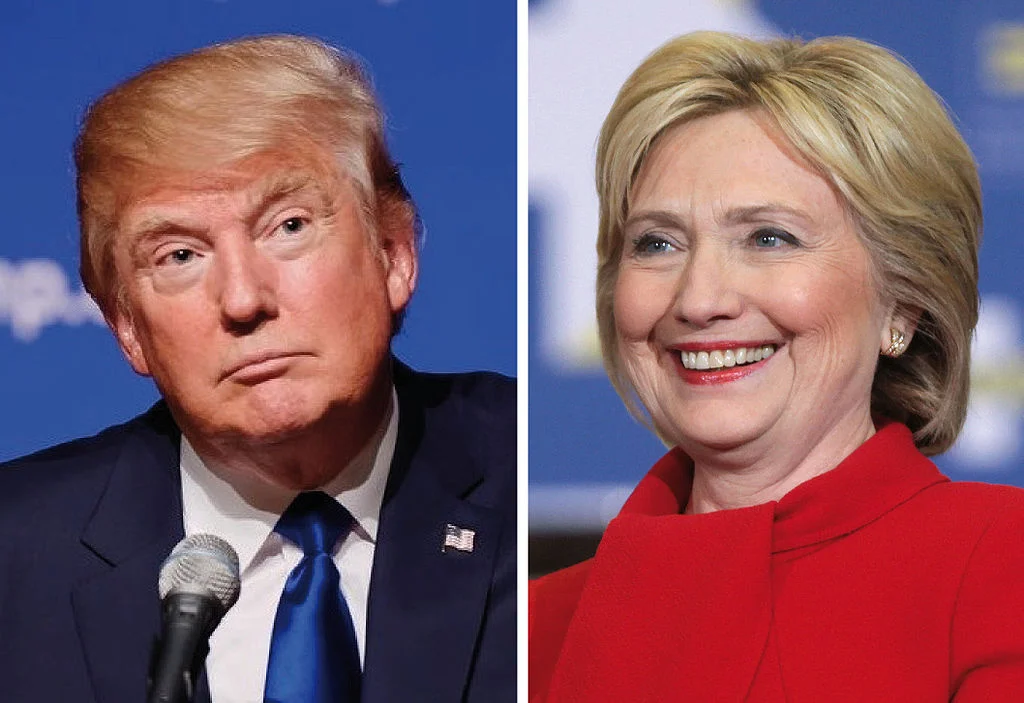
Why did pollsters like me fail to predict Trump’s victory?
America is being shaped irreversibly by a growing new majority of millennials, racial minorities, immigrants and secular people. So how did the presidential election produce such a reactionary result, surprising all the pollsters, including me? “Shy” Tories and Brexiters apparently upended Britain. Did “shy” Trump voters upend America?
The Guardian NOV. 15, 2016
America is being shaped irreversibly by a growing new majority of millennials, racial minorities, immigrants and secular people. So how did the presidential election produce such a reactionary result, surprising all the pollsters, including me? “Shy” Tories and Brexiters apparently upended Britain. Did “shy” Trump voters upend America?
To understand what happened, you have to start with the demand for “change”.
The elites, academics, pundits and even President Barack Obama look at the US and see a dynamic country that is economically and culturally ascendant. But America is also a country of deepening inequality and growing political corruption. Most people struggle with declining or stagnant incomes, while CEOs and billionaires have taken most of the gains in income and wealth. More than anything, people are angry that the game appears to be rigged by corporate special interests.
Donald Trump managed to become the Republicans’ candidate of change by attacking crony capitalism, trade deals favoured by big business, the billionaire SuperPacs that fund the candidates and Hillary Clinton’s ties to Wall Street. That allowed him to ride the support of the Tea Party and white people without a four-year college degree all the way to the nomination.
But the cry for change coming from the new liberal American majority was just as intense. Bernie Sanders’ call for a “revolution” produced landslide victories with millennials and white Democrats without a four-year degree. This progress nearly allowed him to contest the convention. No less than Trump, Sanders attacked Clinton for her Wall Street speeches and SuperPacs.
Clinton achieved her most impressive leads in the polls when she, Sanders and Elizabeth Warren embraced after the primaries and after her convention speechthat demanded an economy that worked for all, not just the well connected. She emerged with her biggest lead when she closed the debates with a “mission” to “grow an economy, to make it fairer, to make it work for everyone”, and “stand up for families against special interests, against corporations”.
That led many more voters to see Clinton as standing for the American middle class, which most working people aspire to, and being better on the economy, truthful and willing to stand up to special interests.
Working as a pollster for Bill Clinton in 1992 and Al Gore in 2000, I watched voters settle into their decisions immediately after the debates. Trump and Hillary Clinton were both talking about change, and Clinton was winning.
But then the campaign’s close was disrupted by a flood of hacked emails, whose release was linked to Russia, intended to show that friends of Bill Clinton were using the Clinton Foundation to enrich the former president, and then by FBI director James Comey’s letter to Congress announcing the reopening of hisinvestigation into Hillary Clinton’s emails.
This allowed Trump to close his campaign with a call to “drain the swamp” and reject “the Clintons’ big business trade deals that decimated so many communities”.
The Clinton campaign fought back. It attacked Comey for his unprecedented intervention and then used its advertising muscle to shift the spotlight from Clinton to Trump. Its ads running right through the very last weekend showed Trump at his worst. By then, nobody could remember that Hillary Clinton was a candidate with bold economic plans who demanded that government should work for working people and the middle class, not corporations. She was no longer a candidate of change.
As President Obama campaigned for her at the end, Clinton urged voters to “build on the progress”. She closed her campaign with a call for continuity and incrementalism. That turn is why the polls turned out to be so wrong.
This was a “change election” for the new American majority too, and that late turn by Clinton produced disappointing turnout among Hispanics, African Americans, single women and millennials. The African Americans’ greatly diminished turnout in Philadelphia, Detroit and Milwaukee likely gave the states of Pennsylvania, Michigan and Wisconsin to Trump.
Clinton’s total vote fell well below Obama’s in 2008 and 2012.
The new American majority really did make up the majority of voters for the first time, and they helped Clinton win the popular vote. But their late pull back upended the pollsters’ key assumptions about turnout.
The other change voters, the white men without a four-year college degree, did their part too. They were never shy about their support for Trump, but concentrated in rural and smaller towns in the rust belt, they became even more consolidated in their support for him, put out lawn signs and turned out to vote in unprecedented numbers. Our polls showed him with a 36-point lead before the conventions. But further consolidation and higher-than-expected turnout gave Trump an unimaginable 49-point lead and 72% of the vote among this group. The Trump vote was never shy, just not fully consolidated.
And don’t forget the non-college-educated white women who, after all, are a majority of the white working class. Through most of the campaign, Trump’s disrespect of women and Clinton’s plans for change allowed her to compete with him for their support. She trailed by just nine points after the debates. But with Clinton mostly attacking Trump and no longer talking about change, the women shifted, almost unnoticed but dramatically, to Trump. He won them by 27 points, a nine-point bigger margin than that achieved by Romney in 2012.
These late turns allowed Trump to win Wisconsin, Michigan and Pennsylvania by a percentage point.
America has changed, but this change election produced a reactionary result.
We Need a New Progressive Era of Renewal
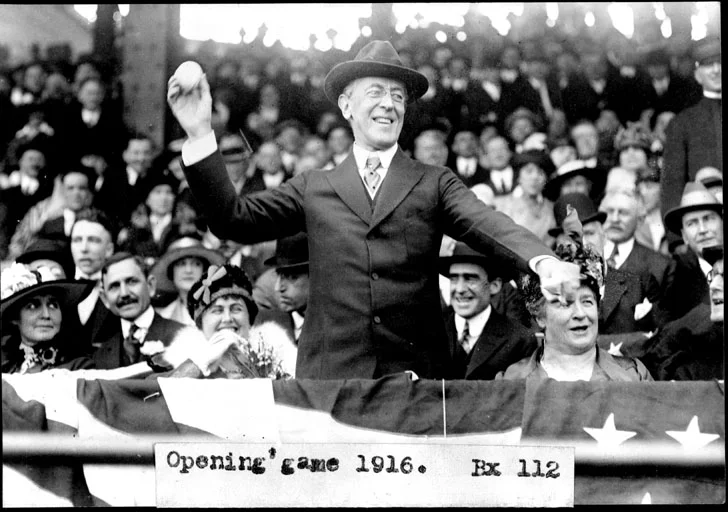
But what needs attention is how people will respond to these shifts, and in particular, the necessary use of democratic institutions to mitigate the effects of these changes. I explain in my book ‘America Ascendant’ how the Industrial Revolution generated vast growth and productivity, which was largely concentrated in the US, because the US experienced 100 years of unregulated immigration and urban expansion. But following this, it produced a two-decade long period of reform to mitigate the effects of these drastic changes. At the heart of this was breaking the bond between politicians and big businesses to regain the trust of the American people, which then led to a cascade of progressive policies, such as restraints on monopolies, reduced tariffs, the income tax, women’s suffrage, the eight-hour working week in interstate commerce and women’s working conditions, that Woodrow Wilson called ‘The Progressive Era of Renewal.’
Global Perspectives NOV, 2016
Q: What’s your view on the global changes we are facing, most notablythe shift towards human capital and creativity?
I think this rhetoric is very real, and will be at the heart of the changes we face over the next few generations. But what needs attention is how people will respond to these shifts, and in particular, the necessary use of democratic institutions to mitigate the effects of these changes. I explain in my book ‘America Ascendant’ how the Industrial Revolution generated vast growth and productivity, which was largely concentrated in the US, because the US experienced 100 years of unregulated immigration and urban expansion. But following this, it produced a two-decade long period of reform to mitigate the effects of these drastic changes. At the heart of this was breaking the bond between politicians and big businesses to regain the trust of the American people, which then led to a cascade of progressive policies, such as restraints on monopolies, reduced tariffs, the income tax, women’s suffrage, the eight-hour working week in interstate commerce and women’s working conditions, that Woodrow Wilson called ‘The Progressive Era of Renewal.’
In our era we are seeing a similar story play out, due to unprecedented immigration rates and vastly improved education systems, which have helped create a new period of innovation. But just as the US did after the Industrial Revolution, we now need the correct processes in place to mitigate these global changes.
Q: Given the rise of Donald Trump and similar characters across our political systems, is the democratic process actually exacerbating the problem, rather than mitigating it?
Trump did better than he deserved to do, because the way the American constitution functions means rural areas tend to be dramatically over-represented. This is at a time when the Indigo Era is driving more and more people into the cities. For example, two thirds of millennials with a regular college degree have moved to the largest 50 cities in the US. And while Obama won 26 of the 30 largest metropolitan areas and over three quarters in the urban core, the Democratic party’s electoral impact is dampened by the way the US Constitution works. Eventually, the political system will have to catch up with the demographic changes we’re seeing.
Q: Would you say that at the heart of the mitigation process must be the breaking of ties between politicians and businesses?
Yes, and I think millennials play a big part in that. Recent figures showed that nearly 60 per cent of millennials believe we need radical change, not just incremental change. With so much distrust of corporations, banking and Wall Street, young people react against a political process they have come to view as corrupt. Their demand to clean up money and politics reminds us of the demand for reforms that changed America a century earlier. Millennials are engaged and they are the most optimistic about what the future brings. That is why I’m so optimistic about America.
Q: How does this all play out in Europe?
Take immigration as an example. Globalisation makes itself heard in growing migration, and one in five migrants in the world are in the United States. There, Trump gained support among the anti-immigrant Republicans because he was the only candidate willing to make immigration his highest political priority. While all the other candidates were shying away from this issue, Trump had nothing to lose and so used inflammatory rhetoric about the threat, and thus he owned ‘the immigration issue.’
The US is the only country I know that has a framework for dealing with its growing immigration and diversity. In Europe, I don’t think there is any country where a politician can say, “We are a multicultural country and our goal is to build our future around that identity.”
I believe immigration was the main reason that the Brexit vote won the EU referendum. I battled over a long number of years working for Labour, working with Tony Blair through three General Elections, trying to get them to deal first with asylum seekers and then immigration. I also tried with Gordon Brown, and with Ed Miliband who struggled to get support delivering a major speech on immigration through his entire five years. I have seen no European leader able to address the immigration issue in a way that wins public trust or wins electoral support. There are also two very different demographic dynamics in the US and Europe underpinning this difference. In the US electorate, the millennials are the fastest growing group and are also driving the overall culture, while in Europe the vote is still dominated by older generations.
“So because Europe has failed to develop a formula for migration that works, it is unable come to terms with globalisation, and that is a problem for its future, but not necessarily for the world as a whole.”
Q: In a time when the globe could enter a new golden age or alternatively take a darker course, what is the role of leaders in navigating that choice?
Well I’ve spent my life trying to help with transformative leaders, including the likes of Bill Clinton, Tony Blair and Nelson Mandela. Mandela is the leader who has taught me the most about leadership. I think Clinton and Blair would say the same. I spent a sustained amount of time with ‘Madiba’ in different periods of his struggle to bring change. He was always learning, humble when he needed, respectful of opponents, balancing many goals, so I came to appreciate the complexity of him as a person, and that contributed to his success. He could adapt when others couldn’t, he had flexibility in tactics, but never in values. As he made the transition from freedom fighter to party leader to president, his national project changed dramatically, but his values never wavered. Above all, he was able to persuade citizens who didn’t share his history or background, or approve of his policies, to trust him enough to make a new national compact. Many ANC leaders were sceptical, but the electorate trusted him completely.
Q: So what can we learn from him?
I learned about how a leader builds a trusted relationship with citizens. Mandela lectured his constituents on their responsibilities as citizens, but he also lectured other leaders on their obligation to “make a better life for all.” He was a complicated, educative leader who did not pander but who always worried out loud, “How does it impact the poorest?”
Right now, there is a huge elite distrust problem around the world.
“Economic and political elites are now seen to be allied, without a real understanding of what is happening in the lives of ordinary citizens.”
In Britain when Labour was in power, the political class was seen to be living in its own world and lost touch. And part of the reason for Brexit was a reaction against the elites that were out of touch. It is the same story in the US. Bernie Sanders and Trump did relatively well in their party primaries because they attacked the elites who were losing track of the average voter. In the US, millennials believe the system to be corrupt due to the tight bond between money and politics. Immigration affects ordinary people and is riling politics everywhere.
Above all, it’s because the elites are comfortable with globalisation and migration, and aren’t thinking about what this means for the average person. So when we think about leadership, and how it will navigate us through the Indigo Era, understanding and combating this disconnect between elite and average people will be absolutely key to re-establishing trust.