Parties of the Left, Wake Up!
Center-left parties in America and Europe are struggling. They are struggling for three reasons: First, they have failed to offer a credible response to the period of prolonged income stagnation and growing inequality; second, they have become part of the political-business-elite accommodation that the public views as corrupt; and third, they have been indifferent to the disruptive effects of globalization and loath to show immigration needs to be controlled.
Democracy Journal JAN. 31, 2017
Center-left parties in America and Europe are struggling. They are struggling for three reasons: First, they have failed to offer a credible response to the period of prolonged income stagnation and growing inequality; second, they have become part of the political-business-elite accommodation that the public views as corrupt; and third, they have been indifferent to the disruptive effects of globalization and loath to show immigration needs to be controlled.
Donald Trump’s improbable and tragic victory has now shown painfully and unnecessarily how important are those factors in the United States too. It would have been better had we been spared this American experiment, but we can at least learn from it, and quickly.
Hillary Clinton lost steam in the closing weeks and days because her campaign chose not to contest the economy or the undue influence of the few over government. They chose not to attack Trump for cheating workers and small contractors and for using cheap Chinese steel and undocumented immigrants. They chose not to contrast Trump’s massive trickle down tax cuts for billionaires with Clinton’s tax cuts for the middle class. They decided not to tantalize voters with her promise of bold reforms to make the economy work for all, not just those at the top.
WikiLeaks published some of my emails to the campaign’s chair, and he invited me after the FBI’s late interjection to share my findings on the power of closing on the economy, but Clinton’s top manager and advisors pushed back, saying, “We can’t win the economic argument.”
Instead, she appealed for unity over division, hope over hate, and experience over bad temperament. She promised an era of unrivaled opportunity for all groups, and to build on Barack Obama’s economic progress. After all, “America is already great.”
The campaign came to that assessment despite Clinton achieving her biggest margins in the race after uniting with Bernie Sanders and Elizabeth Warren and embracing their case for economic change; after her convention speech, when she called for a fair, inclusive economy; and after the debates, wherein she articulated her bold economic plans, prosecuted Trump mercilessly for his “Trumped-up trickle down” tax cuts for billionaires and repeatedly promised to raise taxes on the rich, because they’ve reaped all the gains and “that’s where the money is.”
Secretary Clinton invited me to weigh in on her economic speeches and message, and the result was most evident in the debates. After they aired, just weeks before Election Day, Clinton achieved parity with Trump on who could best handle the economy, the number one issue to be decided on Election Day, according to exit polling, and the top concern for 60 percent of her own voters. Clinton voters, even more than Trump’s, were angry at corporate abuse. Yet Clinton went silent on the economy, corporate irresponsibility, and undue special interest influence.
As a result of that choice, she lost the struggling white working class, particularly the women who broke for Trump at the end. She also lost ground with the progressive base voters, who disappointed on turnout and vote share. Millennials, Sanders voters, single women, and minorities were struggling financially, and they were the voters most determined to disrupt the nexus of Wall Street and Washington. Secretary Clinton was acutely conscious of the pain so many families were experiencing, but, she told me, she couldn’t be seen to be critical of President Obama’s economy in any way.
Iadmire what Obama achieved as President, but he, like so many other center-left leaders who led their countries’ passage through the financial crisis, have been nearly silent on the new economic reality of long-term income stagnation, jobs that don’t pay enough to live on, and the richest 1 percent taking virtually all the new income and wealth gains. Few have championed plausible plans bold enough to produce a more broadly shared prosperity.
Obama faced an economy in free fall and acted boldly to keep it from heading into a depression. The economic project of his whole presidency, accordingly, was getting the economy to a full recovery. That started with restoring the financial health of the big banks. The long-term stagnation of wages and inequality was not part of that project. Obama also declined to be an educative President who spent time and capital explaining his initiatives, even the economic policies and the Affordable Care Act that had the middle class as the main beneficiary. Obama believed that the progress and positive changes on the ground—the “facts”—would ultimately become evident to the people. He would thereby be vindicated and his opponents rejected.
As a result, his economic recovery effort came to be seen as “bailouts.” One year after the passage of the economic recovery program, most thought the big banks, not the middle class, were the main beneficiaries of Obama and the Democrats’ heroic efforts. TARP remains a searing event in the consciousness of a citizenry who think the elites, joined by Obama, rushed to bail out the irresponsible and protect their executive bonuses while doing nothing about home foreclosures or the lost wealth that hit the Hispanic and black communities particularly hard.
Yet this was the President’s message from the beginning, pursued also in the midterm elections of 2010 and 2014 and the general election of 2016: The country is making progress and the economy is recovering and you should punish the Republicans who want us to fail. In his final weekend speech before the 2010 election, he scorned the Republicans who had driven our economy “into a ditch” and were now doing everything possible to impede us, and argued that the car was “pointing in the right direction.”
The President used this refrain again in 2014, a second off-year shellacking, and in his closing weekend appeal in 2016: “We’ve seen America turn recession into recovery” and have created 15.5 million new jobs. Pointedly, he said, “Incomes are rising. Poverty is falling.” So get out and vote because “we now have the chance to elect a forty-fifth president who will build on our progress.”
Obama closed his presidency uncharacteristcially, campaigning publicly and lobbying Congress intently to win passage of the Trans-Pacific Partnership, a proposed trade deal with 12 Pacific Rim countries, encompassing 40 percent of the global economy. He argued that it would grow the U.S. economy, raise labor and environmental standards, and block China’s strategic advance. He won the acclaim of editorial writers, but TPP lost public support as opponents argued that it was actually shaped in secret by hundreds of industry lobbyists and would allow foreign corporations to sue our government and overturn consumer protections. Finally, they argued that it would cost U.S. jobs and push down wages; that was the final straw for many working-class voters who opposed the agreement intensely. This was at the heart of Trump’s campaign in the Rust Belt states and subsequent attacks on Clinton.
Voters already viewed Obama’s economic commentary incredulously and his approval ratings fell dramatically in 2010 in Maine, New Hampshire, Pennsylvania, Iowa, Minnesota, and Wisconsin and in 2014 in Iowa, Michigan, North Carolina, Ohio and Pennsylvania. On the eve of the 2016 general election, Obama’s approval hovered near 40 percent in many of these states.
The discontent was also evident very early on within the progressive base. In both the 2010 and 2014 midterm election years, 40 percent of the new American majority of minorities, unmarried women, and millennial voters disapproved of how the President was handling his job, and many chose not to vote. These were the voters most burdened by new lower-paying jobs, foreclosures, lost house value, and student debt.
As a result, Obama struggled with working-class voters and millennials in his own re-election. In 2012, few commentators and strategists commented on Obama’s millennial vote, which had dropped from 69 to 60 percent, while Romney carried white millennials by seven points. Perhaps millennials were the canary in the coal mine.
And while the Obama Administration was scrupulous in avoiding personal scandal and self-dealing, voters quickly concluded our government favored Wall Street over Main Street, with the way smoothed, they assumed, by lobbyists and big donors. Voters grew ever more skeptical about the massive growth of campaign spending, lobbying, SuperPACs, and dark, secret contributions during Obama’s period in office. Yet the Democratic Administration never prioritized reforming the role of money in politics. Indeed, Obama raised billions outside the system of public financing.
Bernie Sanders, by contrast, declared that he prioritized getting money out of politics over any other policy, since breaking that corrupt bond would liberate government and allow it to work for the middle and working classes. He attacked Hillary Clinton’s SuperPAC and Wall Street contributions and said, “You’re not going to have a government that represents all of us, so long as you have candidates like Secretary Clinton being dependent on big money interests.” Senator Sanders won 72 percent of the millennial vote in the primary.
Many middle Americans believed they were seeing the real Obama when he told his big donors that white workers “cling to guns or religion or antipathy to people who aren’t like them or anti-immigrant sentiment or anti-trade sentiment as a way to explain their frustrations” in tough economic times; or the real Mitt Romney when he described the 47 percent who “are dependent upon government, who believe that they are victims, who believe the government has a responsibility to care for them, who believe that they are entitled to health care, to food, to housing, to you-name-it”; or the real Hillary Clinton when she described half of Trump’s voters as belonging in “the basket of deplorables.” Together, they offer a powerful imagery of our elected leaders from both parties hanging out and catering to the economic and cultural elites, while analyzing and patronizing America’s working people.
Those elites and the great majority of Americans with a four-year college degree are comfortable with globalization, growing international trade, and immigration. They do not fully understand that most working people of all races believe government and elected leaders have an obligation to control immigration. Six-in-ten voters believe immigrants strengthen our country, but they also think borders should be real and citizens should matter more than non-citizens. They worry somewhat about competition for jobs, but even more about access to schools, housing, and health care, all desperately short of resources.
President Obama and Democrats gained majority support in the country for comprehensive immigration reform because their plan involved increased enforcement on the border and in workplaces along with giving the law-abiding, taxpaying undocumented a path to citizenship after paying a fine and learning English. This reform allowed the Administration to manage immigration and build a framework for increasing entry numbers in the future, but they also showed that they were serious about border control and citizenship. President Obama did not allow undocumented immigrants to gain subsidies under Obamacare, and he deported more undocumented immigrants than any other President. He took a lot of heat from activists, but the Democratic Party was probably the only center-left party in the advanced world trusted to address immigration, and that is probably still true today.
During the campaign, Hillary Clinton differed with that approach. She promised to end deportations for all but violent criminals and terrorists and declared, “I’m introducing comprehensive immigration reform within the first 100 days with the path to citizenship.” Her focus was not on managing immigration, but on enforcing immigration laws “humanely” and respecting the rights of immigrants. She paid a price for that, I believe. The biggest hope of the independents and Democrats who voted for Trump was that “he will get immigration under control and deport those here illegally.”
Voters made clear they want an economy, society, and government that works for them. Obama left office with a rising approval rating in the same range as Ronald Reagan, with an economy nearing full employment, and real wages climbing up. Still, half of voters in the last election said the economy was the top priority in their voting choice. These voters were sending a very clear message: They want more than just a recovery. Trump mercilessly exploited that; he won because he offered change and American jobs, vowed to take on disloyal American companies and their corrupt deals with the Washington elite on immigration and trade; Clinton, in the end, engaged on none of them.
Before America gave us Donald Trump, Great Britain, for many of the same reasons, gave us the Conservative Party’s surprise victory in 2015 and, of course, Brexit.
But Hillary Clinton can at least be satisfied with the fact that she won the popular vote by almost 3 million votes, a 2.1-point margin over Trump. The British Labour Party, on the other hand, is struggling today to reach 30 percent of the vote, and the Conservatives hold a double-digit lead.
I myself once worked as a pollster and strategic advisor to Tony Blair when he and Gordon Brown helped create New Labour. They were tough on crime and on its causes and wanted to reward hard work; they showed independence from trade unions so they could, instead, govern for all. Labour attacked Conservative boom-and-bust economic incompetence. They promised limited spending and no rise in income taxes so that voters could trust them to invest, renew, and reform the public services, particularly the National Health Service and schools. They were reelected under the banner, “Schools and Hospitals First!” They introduced a minimum wage and EU work guarantees and aggressively used tax credits to make sure most families saw incomes rise and poverty fall throughout the government’s first decade in power. Labour won the working class and middle class alike, including landslide majorities in two general elections and a respectable majority in the third.
But Blair’s New Labour project did not have much to offer working-class voters. Consequently, the election of 1997 saw a 6.3 point drop in turnout, reaching historic lows, while 2001 saw a further drop of 12 points, the lowest since 1918. The turnout crash was greatest in older industrial Labour seats, among unskilled manual workers and younger blue-collar workers.
I tried to focus the prime minister and Labour party’s attention on that disengagement, but Blair was much more interested in Labour winning comparable levels of support among all classes, and he resisted talking about “hardworking families,” a two-tier Britain, or attacking the Tories for only caring about the few. His New Labour project was more about community, unity, and One Nation, ideas that seemed disconnected from the emerging economic challenges in Britain.
Blair was right to weaken the ability of trade union leaders to dictate the party’s policies and leaders and thus, make Labour electable again, but he also moved toward a new level of accommodation with business and the City, the most dynamic part of the economy. That accommodation, however, also included visible association with very rich donors who helped fund the party and campaigns. And when the expenses scandal rocked the reputation of many MPs, Labour politicians struggled, more than ever, not to look like they were just in it for the money.
But at least, at that time, Blair’s government was associated with stable growth and a broadly shared prosperity. That was not the case when Gordon Brown lost his election in 2010. Incomes had stagnated for the four years before the financial crash. Labour policies were not producing a rising prosperity for those in the middle, yet the party continued to argue for its economic competence and successes.
At the same time, Labour barely spoke above a whisper about immigration, even though immigration from the Commonwealth and expanding EU rose dramatically under Blair and Brown’s watch. The Labour government scarcely acknowledged that asylum seekers and immigrants affected the availability of council housing and increased pressure on the schools and NHS. Blair was not willing to press his party for reform, and Brown viewed these working-class frustrations as racist, most notoriously when a TV microphone that he thought had been switched off caught him calling Rochdale pensioner Gillian Duffy “just a sort of bigoted woman” after she had expressed concerns to him about Eastern European immigration at a campaign event.
Indeed, it could be said that the biggest doubt about the Labour government when it lost power was its failure to get immigration under control. Ed Miliband as Labour’s new leader resisted speaking about the issue or advocating for greater control until the general election neared.
With Labour’s credibility shredded on spending and debt, the party barely challenged the economic policies of the Conservative-led coalition government under David Cameron. It claimed that the Tories were cutting spending “too far, too fast,” but did not challenge deficit reduction as the first task of economic policy. And it did not make the case for long-term investment, growth, and shared prosperity.
Labour’s manifesto for the 2015 general election promised that every policy would be paid for, that the party would “cut the deficit every year,” accelerate the increase of the minimum wage, end zero-hour contracts, guarantee apprenticeships for all those coming out of high school, reduce university fees, freeze energy bills, raise the top tax rate from 45 to 50 percent, but not VAT or income tax, and launch an “all-out assault” on tax avoidance. It felt like fingers in a dike rather than an economic offer to produce rising incomes again.
Over the last two decades, Labour lost votes to abstention, to the Tories, and to the anti-Europe and anti-immigration UK Independence Party.
Ed Miliband reached his highest level of support when he challenged Rupert Murdoch and the tabloids that had illegally hacked phones to produce sensational stories. It seemed then that he was willing to break with the elite “establishment” and call out the cozy arrangement of business and government. He also improved his support and raised Labour’s poll numbers when he committed to freeze energy bills, a policy dismissed derisively by the big utility companies. But those gains were episodic and insufficient for the working class, and Labour lost badly in the general election; it later lost many Labour constituencies to Brexit.
Well, the center-left parties now all across Europe are struggling and losing ground to anti-establishment and anti-immigrant parties. The U.K. Labour Party is even more marginalized under its current leader, Jeremy Corbyn, who questions whether Britain is obligated to respond militarily to a Russian attack on a NATO member and speculates publicly about a nationwide pay cap to address inequality. The party is deeply fractured on immigration and on the free movement of labor from the EU.
In Austria, the anti-immigrant and anti-Islamic Freedom Party candidate Norbert Hofer won 46 percent of the vote in the election for president.
Italian Prime Minister Matteo Renzi resigned after the “No” campaign won almost 60 percent of the vote in the referendum of constitutional reforms that Renzi was pushing. Although this defeat could be explained in a number of ways, Italy is a country where disposable income declined since Renzi formed his Democratic Party government and where 60 percent of the public believes immigration and diversity are a threat to the country—one of the highest levels in Europe.
Donald Trump’s win has given heart to the anti-establishment and anti-immigration parties everywhere, but it also taught us a lot. To start, center-left parties must:
- Put working-class economics front and center.
- See the country’s challenges through the lives of working people and be skeptical of conventional wisdom emanating from the elites in metropolitan center.
- Acknowledge frontally that immigration needs to be better controlled and people are right to want a framework that includes real borders, new migrants contributing through taxes and learning the country’s language, and a framework where citizens receive greater benefits than non-citizens.
- Take on the elite, big money special interests that play too big a role and are the prime drivers of economic and social inequality.
- Offer much bigger economic vision and policies.
Obviously, many of these will be hard to do. One cannot simply pull economic policies bold enough to shift the distribution of income and wealth off the shelf. Our leaders live and breathe the air and culture of our metropolitan centers. Business donors are very real. And accepting the legitimacy of immigration worries will be most controversial and challenging for progressives who embrace multiculturalism and must also fight Donald Trump, Nigel Farage, and Marine Le Pen’s outrageous and racist polices.
The left can still regain the momentum they need to push through bold reforms if they are honest about the past and bold about the future.

Was Barack Obama Bad for Democrats?
President Obama will be remembered as a thoughtful and dignified president who led a scrupulously honest administration that achieved major changes. People argue over whether his impatience with politicians and Republican intransigence denied him bigger accomplishments.
New York Times DEC. 23, 2016
President Obama will be remembered as a thoughtful and dignified president who led a scrupulously honest administration that achieved major changes.
People argue over whether his impatience with politicians and Republican intransigence denied him bigger accomplishments, but that argument is beside the point: He rescued an economy in crisis and passed the recovery program, pulled America back from its military overreach, passed the Affordable Care Act and committed the nation to addressing climate change. To be truly transformative in the way he wanted, however, his success had to translate into electoral gains for those who shared his vision and wanted to reform government. On that count, Mr. Obama failed.
His legacy regrettably includes the more than 1,000 Democrats who lost their elections during his two terms. Republicans now have total control in half of America’s states.
Why such political carnage?
Faced with the economy’s potential collapse as he took office, Mr. Obama devoted his presidency to the economic recovery, starting with restoring the financial sector. But he never made wage stagnation and growing inequality central to his economic mission, even though most Americans struggled financially for the whole of his term.
At the same time, Mr. Obama declined to really spend time and capital explaining his initiatives in an effective way. He believed that positive changes on the ground, especially from economic policies and the Affordable Care Act, would succeed, vindicating his judgment and marginalizing his opponents.
Absent a president educating the public about his plans, for voters, the economic recovery effort morphed into bailouts — bank bailouts, auto bailouts, insurance bailouts. By his second year in office, he spotlighted the creation of new jobs and urged Democrats to defend our “progress.”
When President Obama began focusing on those “left behind” by the recovery, he called for building “ladders of opportunity.” That communicated that the president believed the country’s main challenges were unrealized opportunity for a newly ascendant, multicultural America, rather than the continuing economic struggle experienced by a majority of Americans.
Mr. Obama also offered only tepid support to the most important political actor in progressive and Democratic politics: the labor movement. In the absence of progressive funders in the mode of the conservative Koch brothers, unions are the most important actors at the state legislative level. Yet when the 2010 election ushered in a spate of anti-union governors, who eliminated collective bargaining rights for public employees and passed “right to work” laws, Mr. Obama never really joined this fight. In fact, he spent the last couple of years of his presidency pursuing the Trans-Pacific Partnership Agreement, a free trade law vociferously opposed by the labor movement. Under President Obama, union membership has declined to 11.1 percent from 12.3 percent.
While the Obama campaigns of 2008 and 2012 were models of innovation in online organizing and microtargeting, they did not translate into success in the midterm elections or in Hillary Clinton’s campaign. Democratic turnout dropped in 2010, 2012 and significantly in 2014. Models, it appears, do not substitute for the hard work of organizing and engaging voters in nonpresidential years; models that apparently drove nearly every decision made by the Clinton campaign are no substitute for listening to voters.
Finally, just as he governed, the campaign messages from the president in the midterms and in 2016 were focused on progress and growth.
On the eve of the 2016 election, the president used the refrain: “We’ve seen America turn recession into recovery” and 15.5 million new jobs. Pointedly, he said, “Incomes are rising. Poverty is falling.”
The public’s reaction was stark from the beginning. People did not believe his view on the economy, and his approval ratings fell in Maine, New Hampshire, Pennsylvania, Iowa, Minnesota and Wisconsin in 2010 and in Iowa, Michigan, North Carolina, Ohio and Pennsylvania in 2014 — the states that led the working-class move away from the Democrats.
Just as important, however, was the discontent brewing with the Democrats’ own base. Combined, the approximately 40 percent of minority, unmarried female and millennial voters disapproved of how President Obama was handling his job in 2010 and 2014, and many stayed home during the off-year elections. Mitt Romney carried white millennials by 7 percentage points in 2012.
Mr. Obama did win re-election that year, though only after embracing Teddy Roosevelt’s populist spirit and criticizing the “breathtaking greed of a few.” He declared it a “make-or-break moment for the middle class.” This posture did not animate his governing message or the 2016 presidential election. The president will leave office with a rising approval rating near the same league of Ronald Reagan, an economy nearing full employment and real wages tipping up. Yet a majority of voters in the last election said the economy was the top issue in their vote.
We think voters were sending a clear message: They want more than a recovery. They want an economy and government that works for them, and that task is unfinished.
Stanley B. Greenberg, the author of “America Ascendant,” and Anna Greenberg are partners at Greenberg Quinlan Rosner.
Why did pollsters like me fail to predict Trump’s victory?
America is being shaped irreversibly by a growing new majority of millennials, racial minorities, immigrants and secular people. So how did the presidential election produce such a reactionary result, surprising all the pollsters, including me? “Shy” Tories and Brexiters apparently upended Britain. Did “shy” Trump voters upend America?
The Guardian NOV. 15, 2016
America is being shaped irreversibly by a growing new majority of millennials, racial minorities, immigrants and secular people. So how did the presidential election produce such a reactionary result, surprising all the pollsters, including me? “Shy” Tories and Brexiters apparently upended Britain. Did “shy” Trump voters upend America?
To understand what happened, you have to start with the demand for “change”.
The elites, academics, pundits and even President Barack Obama look at the US and see a dynamic country that is economically and culturally ascendant. But America is also a country of deepening inequality and growing political corruption. Most people struggle with declining or stagnant incomes, while CEOs and billionaires have taken most of the gains in income and wealth. More than anything, people are angry that the game appears to be rigged by corporate special interests.
Donald Trump managed to become the Republicans’ candidate of change by attacking crony capitalism, trade deals favoured by big business, the billionaire SuperPacs that fund the candidates and Hillary Clinton’s ties to Wall Street. That allowed him to ride the support of the Tea Party and white people without a four-year college degree all the way to the nomination.
But the cry for change coming from the new liberal American majority was just as intense. Bernie Sanders’ call for a “revolution” produced landslide victories with millennials and white Democrats without a four-year degree. This progress nearly allowed him to contest the convention. No less than Trump, Sanders attacked Clinton for her Wall Street speeches and SuperPacs.
Clinton achieved her most impressive leads in the polls when she, Sanders and Elizabeth Warren embraced after the primaries and after her convention speechthat demanded an economy that worked for all, not just the well connected. She emerged with her biggest lead when she closed the debates with a “mission” to “grow an economy, to make it fairer, to make it work for everyone”, and “stand up for families against special interests, against corporations”.
That led many more voters to see Clinton as standing for the American middle class, which most working people aspire to, and being better on the economy, truthful and willing to stand up to special interests.
Working as a pollster for Bill Clinton in 1992 and Al Gore in 2000, I watched voters settle into their decisions immediately after the debates. Trump and Hillary Clinton were both talking about change, and Clinton was winning.
But then the campaign’s close was disrupted by a flood of hacked emails, whose release was linked to Russia, intended to show that friends of Bill Clinton were using the Clinton Foundation to enrich the former president, and then by FBI director James Comey’s letter to Congress announcing the reopening of hisinvestigation into Hillary Clinton’s emails.
This allowed Trump to close his campaign with a call to “drain the swamp” and reject “the Clintons’ big business trade deals that decimated so many communities”.
The Clinton campaign fought back. It attacked Comey for his unprecedented intervention and then used its advertising muscle to shift the spotlight from Clinton to Trump. Its ads running right through the very last weekend showed Trump at his worst. By then, nobody could remember that Hillary Clinton was a candidate with bold economic plans who demanded that government should work for working people and the middle class, not corporations. She was no longer a candidate of change.
As President Obama campaigned for her at the end, Clinton urged voters to “build on the progress”. She closed her campaign with a call for continuity and incrementalism. That turn is why the polls turned out to be so wrong.
This was a “change election” for the new American majority too, and that late turn by Clinton produced disappointing turnout among Hispanics, African Americans, single women and millennials. The African Americans’ greatly diminished turnout in Philadelphia, Detroit and Milwaukee likely gave the states of Pennsylvania, Michigan and Wisconsin to Trump.
Clinton’s total vote fell well below Obama’s in 2008 and 2012.
The new American majority really did make up the majority of voters for the first time, and they helped Clinton win the popular vote. But their late pull back upended the pollsters’ key assumptions about turnout.
The other change voters, the white men without a four-year college degree, did their part too. They were never shy about their support for Trump, but concentrated in rural and smaller towns in the rust belt, they became even more consolidated in their support for him, put out lawn signs and turned out to vote in unprecedented numbers. Our polls showed him with a 36-point lead before the conventions. But further consolidation and higher-than-expected turnout gave Trump an unimaginable 49-point lead and 72% of the vote among this group. The Trump vote was never shy, just not fully consolidated.
And don’t forget the non-college-educated white women who, after all, are a majority of the white working class. Through most of the campaign, Trump’s disrespect of women and Clinton’s plans for change allowed her to compete with him for their support. She trailed by just nine points after the debates. But with Clinton mostly attacking Trump and no longer talking about change, the women shifted, almost unnoticed but dramatically, to Trump. He won them by 27 points, a nine-point bigger margin than that achieved by Romney in 2012.
These late turns allowed Trump to win Wisconsin, Michigan and Pennsylvania by a percentage point.
America has changed, but this change election produced a reactionary result.
We Need a New Progressive Era of Renewal
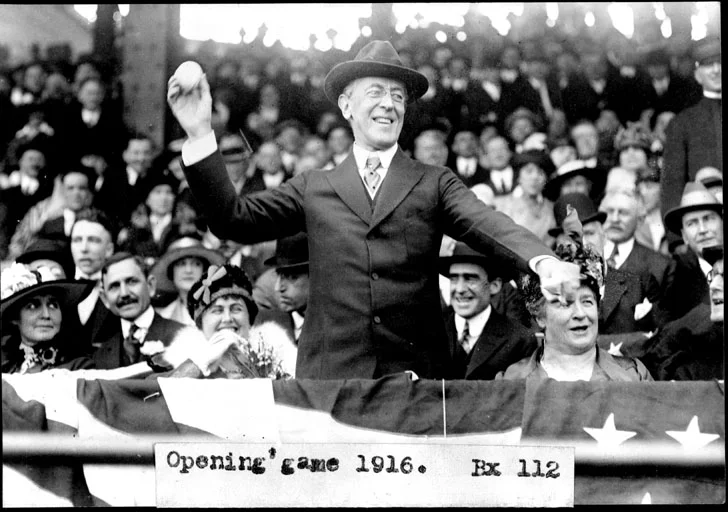
But what needs attention is how people will respond to these shifts, and in particular, the necessary use of democratic institutions to mitigate the effects of these changes. I explain in my book ‘America Ascendant’ how the Industrial Revolution generated vast growth and productivity, which was largely concentrated in the US, because the US experienced 100 years of unregulated immigration and urban expansion. But following this, it produced a two-decade long period of reform to mitigate the effects of these drastic changes. At the heart of this was breaking the bond between politicians and big businesses to regain the trust of the American people, which then led to a cascade of progressive policies, such as restraints on monopolies, reduced tariffs, the income tax, women’s suffrage, the eight-hour working week in interstate commerce and women’s working conditions, that Woodrow Wilson called ‘The Progressive Era of Renewal.’
Global Perspectives NOV, 2016
Q: What’s your view on the global changes we are facing, most notablythe shift towards human capital and creativity?
I think this rhetoric is very real, and will be at the heart of the changes we face over the next few generations. But what needs attention is how people will respond to these shifts, and in particular, the necessary use of democratic institutions to mitigate the effects of these changes. I explain in my book ‘America Ascendant’ how the Industrial Revolution generated vast growth and productivity, which was largely concentrated in the US, because the US experienced 100 years of unregulated immigration and urban expansion. But following this, it produced a two-decade long period of reform to mitigate the effects of these drastic changes. At the heart of this was breaking the bond between politicians and big businesses to regain the trust of the American people, which then led to a cascade of progressive policies, such as restraints on monopolies, reduced tariffs, the income tax, women’s suffrage, the eight-hour working week in interstate commerce and women’s working conditions, that Woodrow Wilson called ‘The Progressive Era of Renewal.’
In our era we are seeing a similar story play out, due to unprecedented immigration rates and vastly improved education systems, which have helped create a new period of innovation. But just as the US did after the Industrial Revolution, we now need the correct processes in place to mitigate these global changes.
Q: Given the rise of Donald Trump and similar characters across our political systems, is the democratic process actually exacerbating the problem, rather than mitigating it?
Trump did better than he deserved to do, because the way the American constitution functions means rural areas tend to be dramatically over-represented. This is at a time when the Indigo Era is driving more and more people into the cities. For example, two thirds of millennials with a regular college degree have moved to the largest 50 cities in the US. And while Obama won 26 of the 30 largest metropolitan areas and over three quarters in the urban core, the Democratic party’s electoral impact is dampened by the way the US Constitution works. Eventually, the political system will have to catch up with the demographic changes we’re seeing.
Q: Would you say that at the heart of the mitigation process must be the breaking of ties between politicians and businesses?
Yes, and I think millennials play a big part in that. Recent figures showed that nearly 60 per cent of millennials believe we need radical change, not just incremental change. With so much distrust of corporations, banking and Wall Street, young people react against a political process they have come to view as corrupt. Their demand to clean up money and politics reminds us of the demand for reforms that changed America a century earlier. Millennials are engaged and they are the most optimistic about what the future brings. That is why I’m so optimistic about America.
Q: How does this all play out in Europe?
Take immigration as an example. Globalisation makes itself heard in growing migration, and one in five migrants in the world are in the United States. There, Trump gained support among the anti-immigrant Republicans because he was the only candidate willing to make immigration his highest political priority. While all the other candidates were shying away from this issue, Trump had nothing to lose and so used inflammatory rhetoric about the threat, and thus he owned ‘the immigration issue.’
The US is the only country I know that has a framework for dealing with its growing immigration and diversity. In Europe, I don’t think there is any country where a politician can say, “We are a multicultural country and our goal is to build our future around that identity.”
I believe immigration was the main reason that the Brexit vote won the EU referendum. I battled over a long number of years working for Labour, working with Tony Blair through three General Elections, trying to get them to deal first with asylum seekers and then immigration. I also tried with Gordon Brown, and with Ed Miliband who struggled to get support delivering a major speech on immigration through his entire five years. I have seen no European leader able to address the immigration issue in a way that wins public trust or wins electoral support. There are also two very different demographic dynamics in the US and Europe underpinning this difference. In the US electorate, the millennials are the fastest growing group and are also driving the overall culture, while in Europe the vote is still dominated by older generations.
“So because Europe has failed to develop a formula for migration that works, it is unable come to terms with globalisation, and that is a problem for its future, but not necessarily for the world as a whole.”
Q: In a time when the globe could enter a new golden age or alternatively take a darker course, what is the role of leaders in navigating that choice?
Well I’ve spent my life trying to help with transformative leaders, including the likes of Bill Clinton, Tony Blair and Nelson Mandela. Mandela is the leader who has taught me the most about leadership. I think Clinton and Blair would say the same. I spent a sustained amount of time with ‘Madiba’ in different periods of his struggle to bring change. He was always learning, humble when he needed, respectful of opponents, balancing many goals, so I came to appreciate the complexity of him as a person, and that contributed to his success. He could adapt when others couldn’t, he had flexibility in tactics, but never in values. As he made the transition from freedom fighter to party leader to president, his national project changed dramatically, but his values never wavered. Above all, he was able to persuade citizens who didn’t share his history or background, or approve of his policies, to trust him enough to make a new national compact. Many ANC leaders were sceptical, but the electorate trusted him completely.
Q: So what can we learn from him?
I learned about how a leader builds a trusted relationship with citizens. Mandela lectured his constituents on their responsibilities as citizens, but he also lectured other leaders on their obligation to “make a better life for all.” He was a complicated, educative leader who did not pander but who always worried out loud, “How does it impact the poorest?”
Right now, there is a huge elite distrust problem around the world.
“Economic and political elites are now seen to be allied, without a real understanding of what is happening in the lives of ordinary citizens.”
In Britain when Labour was in power, the political class was seen to be living in its own world and lost touch. And part of the reason for Brexit was a reaction against the elites that were out of touch. It is the same story in the US. Bernie Sanders and Trump did relatively well in their party primaries because they attacked the elites who were losing track of the average voter. In the US, millennials believe the system to be corrupt due to the tight bond between money and politics. Immigration affects ordinary people and is riling politics everywhere.
Above all, it’s because the elites are comfortable with globalisation and migration, and aren’t thinking about what this means for the average person. So when we think about leadership, and how it will navigate us through the Indigo Era, understanding and combating this disconnect between elite and average people will be absolutely key to re-establishing trust.