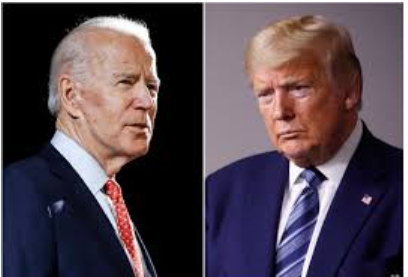
Democrats must not draw the wrong lessons from Labour’s defeat
After the UK Labour party’s humiliating general election defeat, “moderate” Democratic presidential candidates and commentators in the US urged the Democrats to learn the lessons of Brexit and Donald Trump: don’t veer too far-left and make radical promises.
Meanwhile, Steve Bannon, the president’s former adviser, correctly reminded progressives in Britain and the US that “Brexit and Trump were inextricably linked in 2016”. He then provocatively — and incorrectly — added: “They are inextricably linked today.”
The backlash against Trump’s nativist vision shows the US is not following the UK’s path
After the UK Labour party’s humiliating general election defeat, “moderate” Democratic presidential candidates and commentators in the US urged the Democrats to learn the lessons of Brexit and Donald Trump: don’t veer too far-left and make radical promises.
Meanwhile, Steve Bannon, the president’s former adviser, correctly reminded progressives in Britain and the US that “Brexit and Trump were inextricably linked in 2016”. He then provocatively — and incorrectly — added: “They are inextricably linked today.”
The Full Version of this Article can be Found at FINANCIAL TIMES
Trump backfire: Americans increasingly embrace 'nation of immigrants' history and future
Donald Trump came down the escalator at Trump Tower in June 2015, lamented that Mexico sends us its worst, murderers and rapists. His convention speech featured mothers whose loved ones were murdered by illegal immigrants, and he attacked Hillary Clinton for supporting open borders. Later, according to a new book, he proposed moats, alligators, flesh-piercing spikes and shooting immigrants in the legs as they crossed the border.
He succeeded in raising the importance of immigration as a voting issue and defining difference between the parties. But it hasn’t worked out as planned. In fact, it’s quite the opposite.
Some swing white working-class voters shifted to Trump on immigration in 2016, yet the proportion of voters who wanted to create a pathway to citizenship for illegal immigrants went up overall. Then, as president, Trump tried to implement a Muslim travel ban and repeatedly sought to get funding for a border wall to protect from the Central American caravans. How did America respond?
The Full Version of this Article can be Found at USA Today
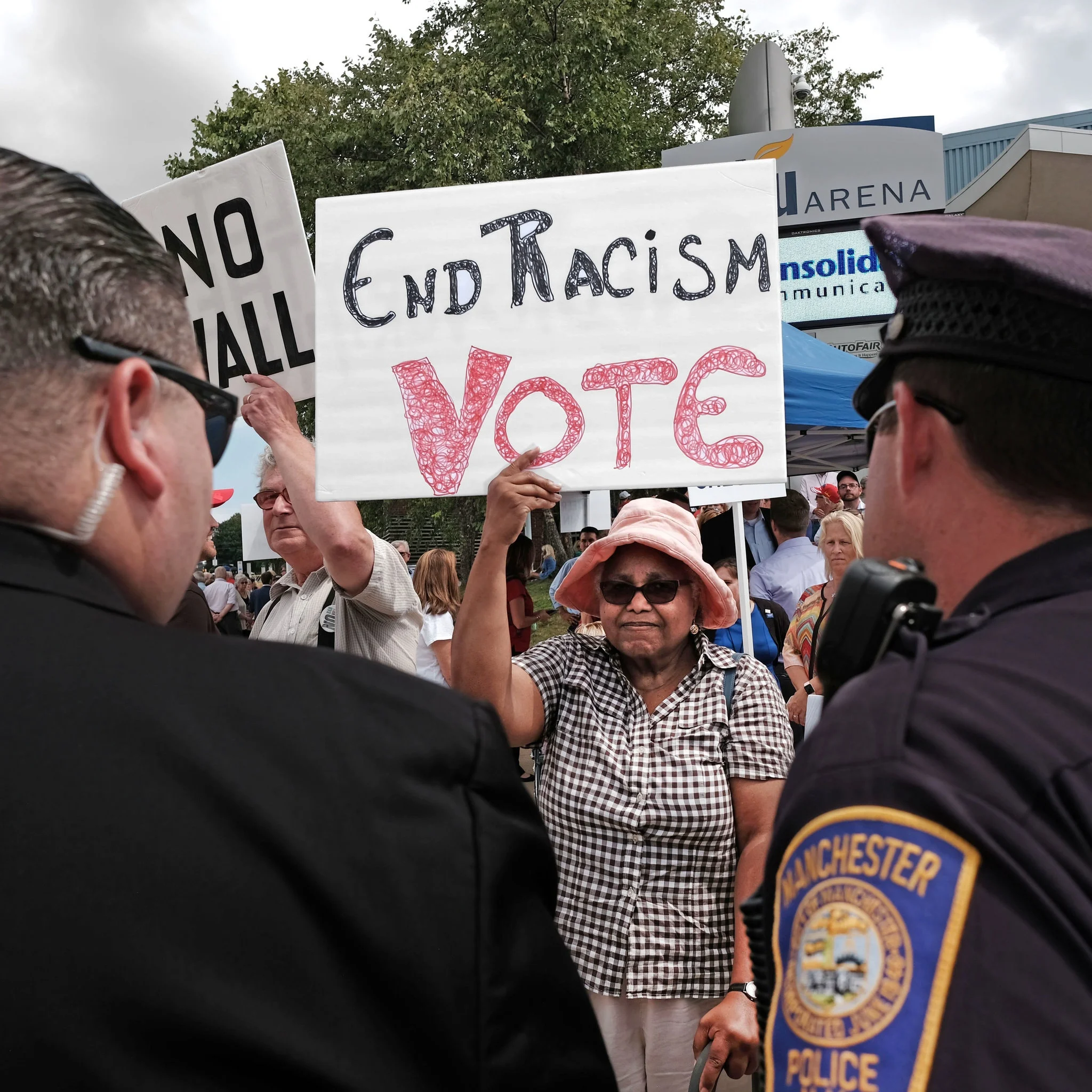
The Republican Party Is Doomed.
The 2020 election will be transformative like few in our history. It will end with the death of the Republican Party as we know it, leaving the survivors to begin the struggle to renew the party of Lincoln and make it relevant for our times. It will liberate the Democratic Party from the country’s suffocating polarization and allow it to use government to address the vast array of problems facing the nation.
From listening to the waves of fraught criticism that followed each of the Democratic debates so far, you would not think 2020 was such a juncture. Commentators worried that the candidates’ anti-business policies and over-the-top plans for government would drive away moderate voters. They watched the candidates excite the Democratic base at the expense of independent voters whom they believe long for a return to bipartisanship. The commentators were just as befuddled that the Democratic candidates were critical of President Barack Obama, who knew something about “electability.”
Yes, Mr. Obama won in 2012, but he was the first president since Woodrow Wilson to win a second term with fewer Electoral College votes and a smaller winning margin in the popular vote over his closest rival than in his first election. Of course, Mr. Obama was met by a Tea Party revolt that helped push many white working class voters away from the Democratic Party, but his administration’s rescue of the big banks, along with prolonged unemployment and lower or stagnant wages for the whole of his first term, meant that the Democratic base failed to turn out and defend him in election after election. As a result, Mr. Obama presided over the crash of the Democratic Party in 2010 and 2014 that gave the Republican Party control of Congress and total partisan control in just over half of the states.
The elites who mostly live in America’s dynamic metropolitan areas were satisfied with America’s economic progress after the financial crash, but overall it helped make Donald Trump electable. He understood how dissatisfied the country was with the status quo. So rather than asking voters which candidate is more “electable” or who has the best chance of defeating President Trump, we need to ask which leader best understands this tumultuous period. Which candidate has a theory of the case that pushes aside other interpretations and critiques?
This is a transformational moment. Do the Democrats understand how to take advantage of it?
The 2020 election will be transformative like few in our history. It will end with the death of the Republican Party as we know it, leaving the survivors to begin the struggle to renew the party of Lincoln and make it relevant for our times. It will liberate the Democratic Party from the country’s suffocating polarization and allow it to use government to address the vast array of problems facing the nation.
From listening to the waves of fraught criticism that followed each of the Democratic debates so far, you would not think 2020 was such a juncture. Commentators worried that the candidates’ anti-business policies and over-the-top plans for government would drive away moderate voters. They watched the candidates excite the Democratic base at the expense of independent voters whom they believe long for a return to bipartisanship. The commentators were just as befuddled that the Democratic candidates were critical of President Barack Obama, who knew something about “electability.”
Yes, Mr. Obama won in 2012, but he was the first president since Woodrow Wilson to win a second term with fewer Electoral College votes and a smaller winning margin in the popular vote over his closest rival than in his first election. Of course, Mr. Obama was met by a Tea Party revolt that helped push many white working class voters away from the Democratic Party, but his administration’s rescue of the big banks, along with prolonged unemployment and lower or stagnant wages for the whole of his first term, meant that the Democratic base failed to turn out and defend him in election after election. As a result, Mr. Obama presided over the crash of the Democratic Party in 2010 and 2014 that gave the Republican Party control of Congress and total partisan control in just over half of the states.
The elites who mostly live in America’s dynamic metropolitan areas were satisfied with America’s economic progress after the financial crash, but overall it helped make Donald Trump electable. He understood how dissatisfied the country was with the status quo. So rather than asking voters which candidate is more “electable” or who has the best chance of defeating President Trump, we need to ask which leader best understands this tumultuous period. Which candidate has a theory of the case that pushes aside other interpretations and critiques?
The Full Version of this Article can be Found at the New York Times

Trump promised a new trade policy. But his new NAFTA might be worse than the old one.
Donald Trump disrupted the 2016 election and won many “forgotten Americans” in part by promising to fight for lower prescription drug prices and to tear up or renegotiate the North American Free Trade Agreement (NAFTA), the Trans-Pacific Partnership agreement (TPP) and any other trade agreement that disadvantaged American workers.
His rival for the presidency, former secretary of state Hillary Clinton was hamstrung by her inability to attack these deals: Her husband signed the first into law, while her former boss, President Barack Obama, campaigned to win ratification for the TPP. This restriction left room for candidate Trump to attack the secrecy and special interests that rigged U.S. trade deals to make it easier to outsource American jobs and to make trade a voting issue in the industrial battleground states.
But, ironically, the intensifying debate over the renegotiated NAFTA that President Trump is seeking to rebrand as the United States-Mexico-Canada Agreement (USMCA) suggests that the president’s trade policy is not so different from those of his predecessors. Certainly, the new coalition of 200 corporations and business lobby groups, including Citibank, the American Petroleum Institute and the American Farm Bureau Federation, that just launched a campaign to push Trump’s renegotiated North American trade deal through Congress doesn’t seem to think that there’s anything new in the deal that threatens business-as-usual.
And when told more about what is in “NAFTA 2.0,” voters in surveys and focus groups I’ve conducted this year for Public Citizen have second thoughts about the supposedly new and improved trade deal.
The Full Version of this Article can be Found at the Washington Post
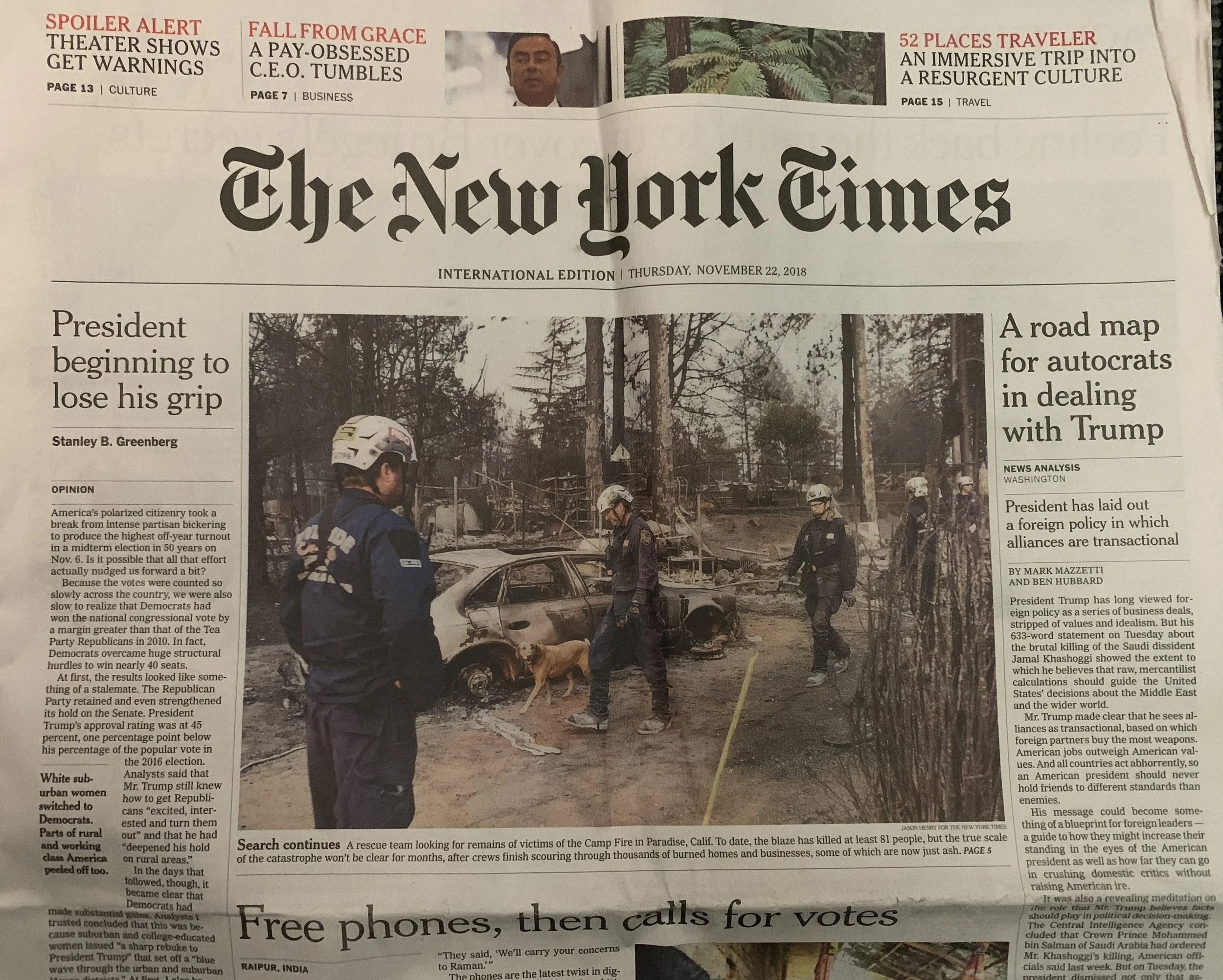
Trump is Beginning to Lose His Grip
America’s polarized citizenry took a break from intense partisan bickering to produce the highest off-year turnout in a midterm election in 50 years on Nov. 6. Is it possible that all that effort actually nudged us forward a bit?
Because the votes were counted so slowly across the country, we were also slow to realize that Democrats had won the national congressional vote by a margin greater than that of the Tea Party Republicans in 2010. In fact, Democrats overcame huge structural hurdles to win nearly 40 seats.
At first, the results looked like something of a stalemate. The Republican Party retained and even strengthened its hold on the Senate. President Trump’s approval rating was at 45 percent, one percentage point below his percentage of the popular vote in the 2016 election. Analysts said that Mr. Trump still knew how to get Republicans “excited, interested and turn them out” and that he had “deepened his hold on rural areas.”
In the days that followed, though, it became clear that Democrats had made substantial gains. Analysts I trusted concluded that this was because suburban and college-educated women issued “a sharp rebuke to President Trump” that set off a “blue wave through the urban and suburban House districts.” At first, I also believed that was the main story line.
But the 2018 election was much bigger than that. It was transformative, knocking down what we assumed were Electoral College certainties. We didn’t immediately see this transformation because we assumed that Mr. Trump and the polarization in his wake still governed as before.