
After Trump, the Republican Party May Become More Extreme
If Biden wins, Democrats will face a harsh political landscape.
The numbers give Joe Biden ample reason for confidence about the election. Only 42 percent of voters, according to polling averages published by FiveThirtyEight and RealClearPolitics, currently support the Republican incumbent’s reelection. When asked, “Do you approve or disapprove of the job Donald Trump is doing as president?”—the wording used by many polling organizations—only about 43 percent of Americans say they approve.
Although only about 2 percent of voters are still undecided, Trump stands before a nearly insurmountable wall. America has never had a president whose disapproval rating, since the first month of his presidency, has been higher than his approval rating. Two weeks before the election, more than 50 percent of voters think he is doing a bad job and plan to vote for his opponent. Many already have. As a Democratic pollster, I am delighted by all the evidence that most of the country will reject Trump, his racism, his values, his policies, and his vision for America.
Even so, 43 percent of Americans approve of how Trump is doing. Consider the implications for both parties and the nation. These voters approve after 215,000 people have died from the coronavirus; after 25 million ended up on unemployment insurance; after The New York Times found that Trump had paid only $750 in taxes in his first year as president and owes hundreds of millions of dollars to his creditors; after The Atlantic reported that he called American soldiers who died in battle “suckers” and “losers.”
Yet if Democrats win the presidency—and even both houses of Congress—their difficulties will burgeon the day Trump leaves office. Not only must they hold their own coalition together as they contend with the coronavirus and the economic crisis that it created, but they will face fierce opposition from the voters who support Trump despite everything. Far from being chastened into moderating the GOP’s rhetoric and cooperating with a new administration, the remaining elements of a vanquished Republican Party will likely become more extreme. It’s happened before.
The full article can be read at The Atlantic.

How Trump Is Losing His Base
Focus groups with working-class and rural voters show the deep health care crisis in America, and trouble for Trump’s re-election.
The heartbreaking health care crisis that is ravaging working-class and rural communities threatens to cut short Donald Trump’s political career, and demands a forceful response from opposition Democrats. It will teach big lessons about how to reach working people who are struggling, regardless of color. That is clear to me after listening to white working-class voters in Zoom focus groups for the American Federation of Teachers and Voter Participation Center in the first week of August, outside of metropolitan areas in rural Wisconsin, the Mahoning Valley region in Ohio (also known as Steel Valley), northern Maine, and suburban Macomb County, Michigan.
The results of these sessions also fit with the results of a phone survey I conducted of working-class voters in the 16 battleground states, after Joe Biden’s selection of Kamala Harris for vice president and the launch of the Democratic National Convention, though before his final-night acceptance speech. In 2016, a white working-class revolt enabled Trump to win men by an unimaginable 48 points and women by 27. But disillusionment was real in the midterms: The Republican House margin dropped 13 points across the white working class. In the new poll, Trump lost a further 6 points with white working-class women, where Biden only trailed Trump by 8 points (52 to 44 percent). While Trump has been throwing a lot of red meat to his base, white working-class men have not been dislodged from their trajectory, as Trump’s margin eroded another 4 points.
These are mostly low-wage families, many with children raised by a single parent. They are consumed with rising opioid deaths and disabilities and a deadly expensive health care system. That was a big part of why they voted for Donald Trump in 2016: so he could end Obamacare and its costly mandate, and deliver affordable health insurance for all. When he failed to do so, many voted against the Republicans in the midterms.
The full article can be read at The American Prospect

Believe the Polls This Time
These aren’t Hillary Clinton’s numbers. Biden has a wide lead because the landscape has changed.
Recent polls could hardly be more reassuring for voters who want to be done with Donald Trump. “Biden Builds Largest Lead This Year,” a CNN headline declared. “Biden Hits 55%–41% Against Trump in Biggest National Poll Lead Yet,” reported The Daily Beast. “Republicans should be petrified by the polls,” a Washington Post opinion piece asserted. Yet the polls also frighten Democrats who, four years ago, got their hopes up amid favorable numbers for Hillary Clinton.
Noting reports that Joe Biden holds a healthy lead in Michigan—one of three Rust Belt states in which Trump narrowly upset Clinton—Representative Debbie Dingell told participants in a recent online Democratic campaign event, “I don’t believe these numbers.” And Dingell, who introduced herself at the event as “Debbie Downer,” has standing to dispute polls that look rosy for her party. In 2016, she’d warned me that the Clinton campaign was going badly in Macomb County—the suburban home of the white, working-class, Catholic voters whom my research decades earlier had labeled “Reagan Democrats.” Dingell’s fear that Clinton could lose Michigan was borne out.
But this moment is very different. To start, during the summer and fall of 2016, Clinton never had the kind of national poll lead that Biden now has. She led by an average of four points four months before the election and the same four points just before Election Day. This year, after Biden effectively clinched the nomination, he moved into an average six-point lead over Trump, which has grown to nearly 10 points after the death of George Floyd and the weeks of protests that have followed. The lingering apprehension among Democrats fails to recognize just how much the political landscape has changed since 2016. We are looking at different polls, a different America, and different campaigns with different leaders.
The full article can be read at The Atlantic
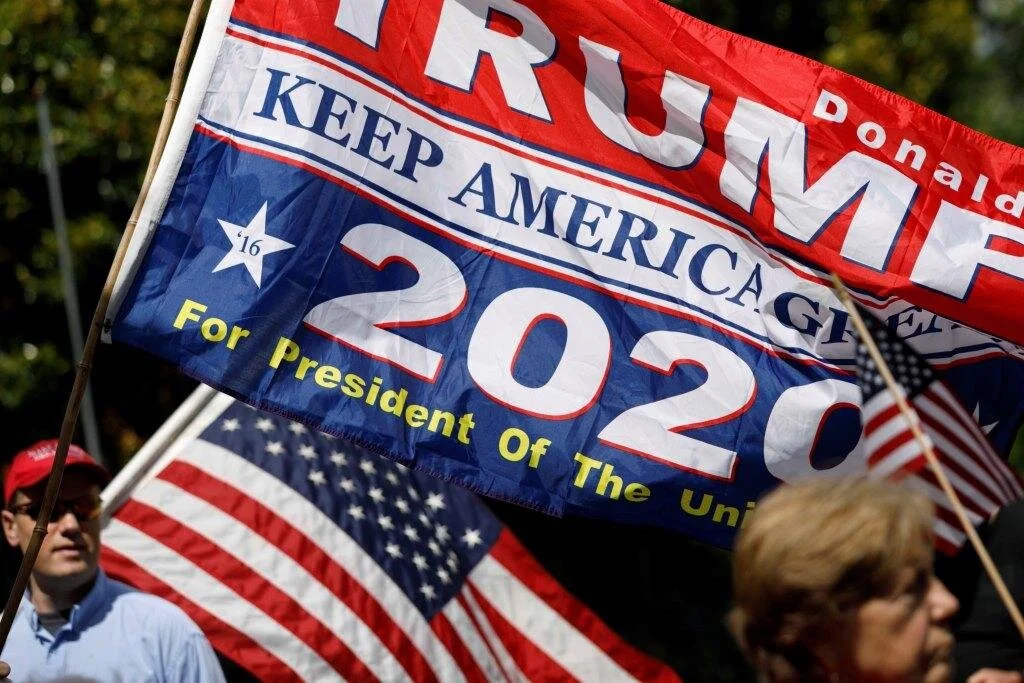
The Tea Party’s Last Stand
The legions that swept over the Republican Party in 2010 aren’t ascendant today—and they’ve scared a lot of other Republicans away.
As the ranks of the protesters against the murder of George Floyd grew to hundreds of thousands in the ensuing two weeks, the country saw the face of a young, racially diverse America determined to call out the racism shaping police misconduct. But those protesters were saying so much more. They were also calling out the racism at the heart of the deadly carnage from the pandemic and racism at the heart of the economic carnage. They were calling out a profoundly unequal America.
President Donald Trump was in a vengeful and dangerous mood. He was trapped in the White House, where the Secret Service sent him to a secure bunker; in return, he demanded a high fence be built around the White House compound. He demanded governors get tougher and claimed the right to use the U.S. armed forces to control domestic political protests. He told the country he was a “law and order” president and could use the “unlimited power” of the military. And on cue, his officers teargassed the peaceful protesters in Lafayette Square. An intimidating phalanx of police officers on horseback cleared the way for him to reach St. John’s Episcopal Church.
But most revealing was his tweet, “Tonight, I understand, is MAGA NIGHT AT THE WHITE HOUSE???” That was his call to his millions of followers to rally and defend his presidency.
The rallying to defend Trump was pathetic.
More than 2,000 miles from the White House, scores of residents armed with assault weapons did turn out to guard the streets of Coeur d’Alene, Idaho, protecting against a rumored attack by “ANTIFA agitators” that, of course, never came. White nationalists outside Philadelphia conducted a mock police execution of George Floyd.
The full article can at The American Prospect
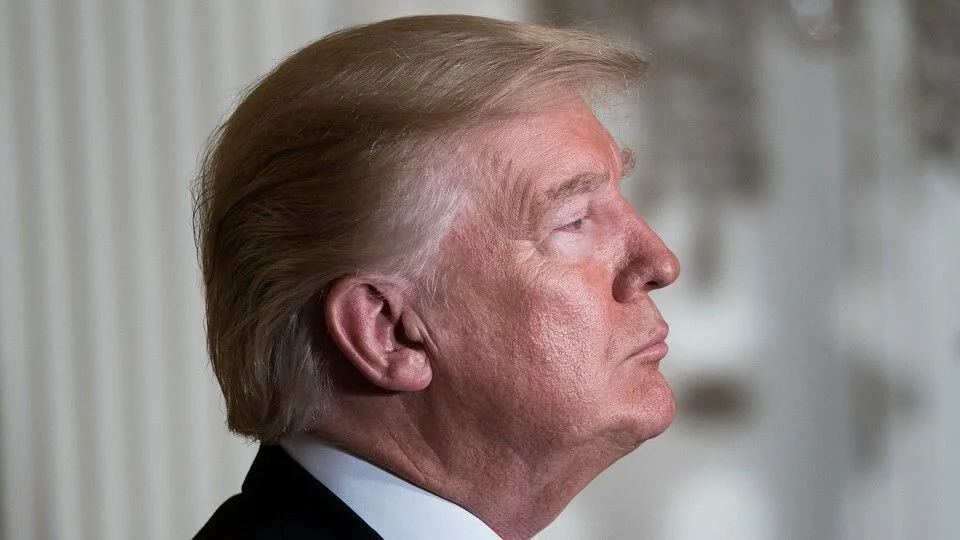
Americans’ Revulsion for Trump Is Underappreciated
As Democrats fret about their own prospects, many fail to recognize the president’s fundamental weakness.
The release on Friday of an ABC News/Ipsos poll indicating that 55 percent of Americans approved of Donald Trump’s handling of the coronavirus—12 points higher than the previous week—prompted another round of fatalistic chatter in certain quarters of the political establishment. Shocked by Trump’s victory in 2016, some left-leaning commentators and rank-and-file Democrats alike have been steeling themselves for his reelection in 2020, noting that most presidents win second terms; that, at least before the pandemic, the economy was humming along; and more recently that, during moments of national disaster, Americans tend to rally around the leader they have.
But these nuggets of conventional political wisdom obscure something fundamental—something that even Democrats have trouble seeing: The United States is in revolt against Donald Trump, and the likely Democratic nominee, former Vice President Joe Biden, already holds a daunting lead over Trump in the battleground states that will decide the 2020 election. By way of disclosure, I am a Democratic pollster; for professional and personal reasons alike, I want Democratic candidates to succeed. But no matter what, I also want candidates and party operatives to base decisions—such as where and how to campaign—on an accurate view of the political landscape. At the moment, Democrats are underestimating their own strength and misperceiving the sources of it.
The full article can be found at The Atlantic