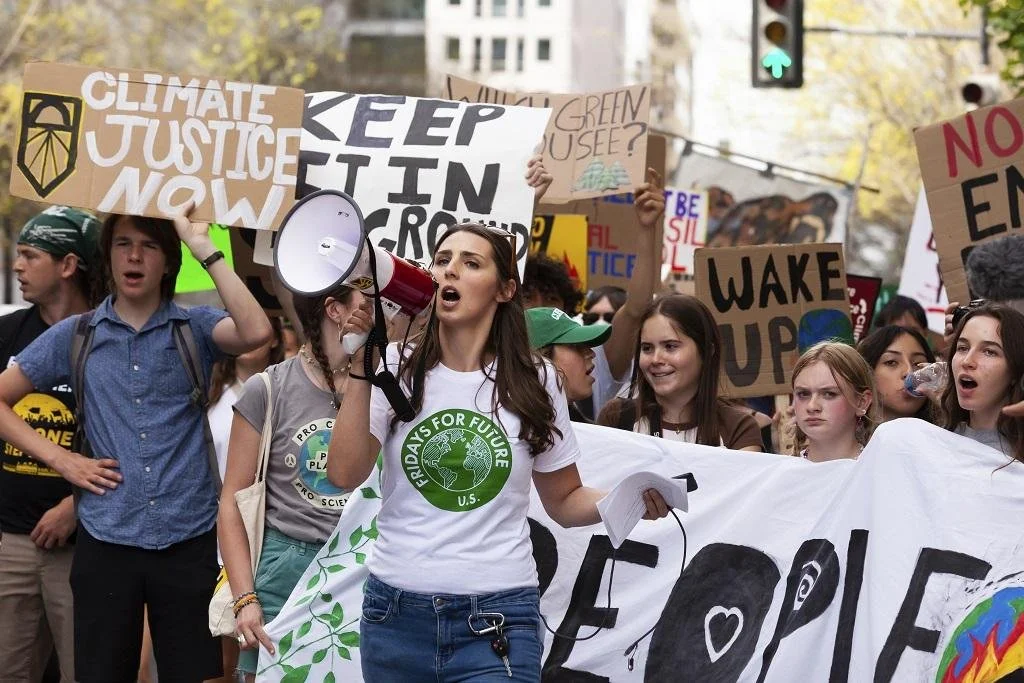
After Ukraine, Voters Want Climate Solutions
New polling shows a bolstered desire for a rapid transition to green energy.
The Russian invasion of a democratic Ukraine, the disruption of Russian oil and natural gas, and an unimaginable spike in gasoline prices have disrupted both global and domestic energy politics. They have done so in completely surprising but understandable and reassuring ways.
Predictably, Russia is reviled in ways we have not seen since the hottest days of the Cold War. In polling, the proportion of respondents viewing Russia negatively reached 72 percent, including 63 percent who were very negative. That was also matched by the polarized and symmetric embrace of NATO, the North Atlantic Treaty Organization. In June, a plurality of 36 percent had warm feelings toward it, though a fifth was not sure. Not now. A 2-to-1 majority feels warmly about NATO. And people also feel significantly warmer about allies like France, Germany, and the United Kingdom.
But the war has also brought a series of dramatic and surprising shifts in public thinking about energy and climate change, according to surveys I conducted in France, Germany, the United Kingdom, and the United States for the Climate Policy and Strategy project.
After the global COP26 conference in Scotland, the public debate moved to whether China and India were on the program of getting to net-zero carbon emissions, and how one dealt with the high cost of transitioning to renewable energy. Some conservatives in Britain, Germany, and the United States raised those issues. And in our January survey in Germany, the new government elected on a climate agenda was getting the most support for helping consumers with their energy bill when the country’s carbon tax came into force, by removing the climate surcharge and shifting the cost onto the federal government.
But now in the United States, the spike in gas prices has led people to believe fossil fuels are the most expensive option. Every day they stare at figures approaching $5.00 and $6.00 a gallon, the highest price ever at the pump, it deepens the consciousness of this cost equation. A majority in my April survey now believe the cost of the transition will not be unacceptably high.
When we asked which concept is “more fundamental,” the “climate crisis” or “energy crisis,” a majority of 52 percent said the former. Only 41 percent chose the “energy crisis.” A third answered with intense agreement that the climate crisis is fundamental, compared to only a quarter on the energy crisis.
The constant experience of worsening extreme weather events is also changing the calculation. The proportion giving positive reactions to measures to prevent global warming has jumped from 44 percent to 52 percent since last June.
The desire to prioritize the climate crisis also holds for those most likely to vote in a midterm election and in the battleground states and districts.
Some of these surprising changes are explained by America becoming somewhat less polarized on climate change. A big majority of moderate and a plurality of conservative Republicans now believe climate change requires major action and is worth the cost.
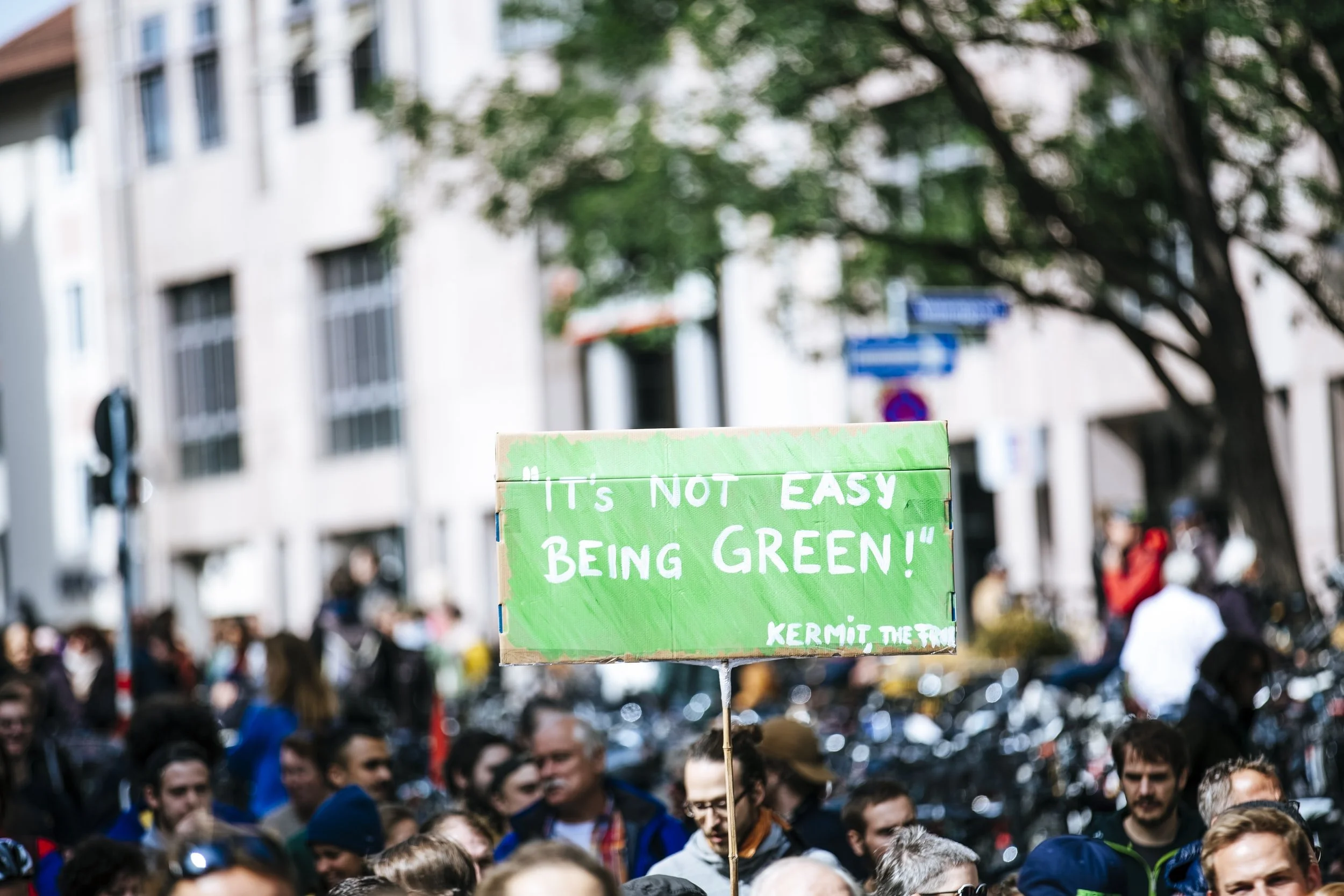
If you think we face a “climate crisis,” imposing more costs on energy consumers will not deliver the energy transition
There is virtually no national leader in in the developed work, Europe or OECD that does not describe today’s global warming as a “climate crisis,” “climate emergency” or even a looming “climate apocalypse.”
Those warnings are sobering. And they sound like the kind of conclusions that would be followed by calls to declare war, join other nations in new alliances, and unify and mobilize the citizenry to confront this new enemy.
When we faced such national and global crises in the past, Franklin Roosevelt and Winston Churchill called on the nation to act. Did they say, we are starting this great national effort by raising your taxes and putting up fees on petrol/gas and putting up tariffs on imports?
Of course, in time, government action and regulation led to higher prices on some products, others being barred or rationed.
Huge majorities of citizens in the United States, the United Kingdom and the European Union believe “climate change is a threat, and we need major action to combat it.” In a recent poll conducted for the organization, Climate Policy & Strategy, over 60 percent affirmed, with only 27 percent believing, “the threat of climate change is exaggerated and the high cost of fixing it may not be worth it.”
Yet many industries and academics and elected leaders have insisted on prioritizing raising the cost of fossil fuels, implementing a carbon tax and putting on green levies or taxes on utilities.
What a surer way to temper some of the citizenry’s enthusiasm for acting against climate change.
It is the ordinary citizen who is clear-eyed on its priorities and what is the sensible way nations normally address such a national and global crisis.
We have not lost the ordinary citizen yet. Every country faces a spike in energy bills, and they have a range of explanations for it. In the United Kingdom, they look to “profiteering” by the energy companies,” Russia reducing supplies, and growing global demand. At the bottom of the list are “green levies and taxes,” mentioned by just 13 percent.
In Germany, 51 percent say high global prices and 41 percent, expressive levels of taxation. Only 29 percent mention the “the transition to green energy.”
But there is a growing minority in Germany who mention higher energy costs as a reason to oppose government policies.
Have elites noticed that the United States passed its bi-partisan infrastructure package with President Biden and the Democrats leading the opposition to any rise in the gas price? Any further Build Back Better bill will be financed by higher taxes on big corporations and billionaires. The United States has ruled out any carbon tax or rise in energy prices.
My surveys finds only a quarter of German voters support “a tax on burning coal, oil and natural gas would be a fair and efficient way of encouraging people to switch to lower-carbon ways of living.” Putting up taxes and fees on fossil fuels drops to 20 percent as a way to “fund the development of renewables and a sustainable economy,” when the choice is the government taking the lead in “setting regulations to make energy more efficient and invest in innovative research to enable” to a low carbon economy.
While the elite discourse is focused on market solutions, the public is looking for new national targets to drive business and consumer behavior, new regulations and enforcement, and investments to spur innovation and help families deal with associated costs.
In the Climate Policy Strategy surveys, we asked the public which were most important to do. In France, it was creating new crimes for causing environment damage, followed by regulations to increase insulation of buildings and banning some internal flights. Under Merkel, it favored incentives to install solar panels and speeding up closing of coal-fired plants. Under Scholz, it is getting 80 percent electricity from renewables, restrictions on short-haul flights, and a social compensation to offset costs for “ordinary people” from EU carbon pricing. In the United Kingdom, the public chose increasing offshore wind capacity to power every home.
And in the United States, the voters embrace administration plans to replace 100 percent of lead pipes and new jobs installing service lines, $50 billion investment in making infrastructure and homes resilient and energy efficient and eliminating subsidies to fossil fuel industries to pay for environmental measures.
The public believes we face a climate emergency, and they are quite reasonably backing bold policy changes to address it. Elites should appreciate the imposition of added charges at a time when the cost of living is so painful will jeopardize the support on which climate policy depends.

The Real Lesson for All Factions of the Democratic Party
Offer a hopeful vision where all Americans make progress.
I was totally persuaded by William Galston and Elaine Kamarck’s 1989 study, The Politics of Evasion, when they wrote, “Too many Americans have come to see the party as inattentive to their economic interests, indifferent if not hostile to their moral sentiments, and inattentive in defense of their national security.” At the time, I too was tired of winning only one presidential election over two decades, and averaging 42 percent of the vote.
I thank Galston and Kamarck for raising these issues. But unfortunately, you don’t get any further help from them on removing the blinders that keep you from seeing America.
The full report can be read at The American Prospect.
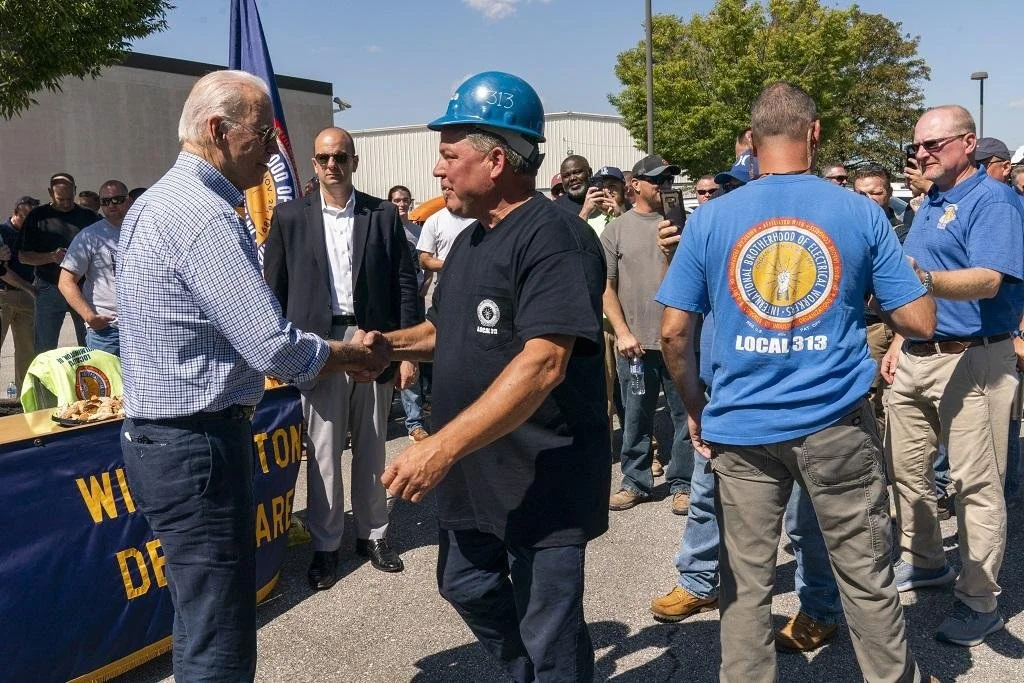
Democrats, Speak to Working-Class Discontent
America is at a perilous moment when a Trump-led Republican Party is steaming ahead to knock down every guardrail protecting free elections. Over 80 percent of Republicans, according to a recent national survey by the University of Virginia Center for Politics and Project Home Fire, believe “our country needs a powerful leader in order to destroy the radical and immoral currents prevailing in society today.” A third now believe violence is justified to “save our country,” according to a national survey by the Public Religion Research Institute.
The Republican threat to America’s constitutional experiment has led me to ask: What is our plan to save it? Here’s mine.
I am a pollster and political strategist with long experience advising Democratic candidates. Now, more than ever, Democratic victories are necessary to prevent Republicans from locking up the system. My plan is to focus on working-class voters—white, Black, Hispanic, Asian—and figure out every legal and ethical way possible for Democratic candidates to regain even a few extra points of support from them.
The full report can be read at The American Prospect.
Polling: How Democrats Can Win Back the Working Class
Recent research conducted by Democracy Corps, Equis Labs, HIT Strategies for Democracy Corps, and American Federation of Teachers of Black, Hispanic, AAPI, and white working-class voters shows that Joe Biden and the Democrats can embrace a powerful middle class/blue collar message along with their transformative policy agenda and dramatically change their fortunes. Hearing that full agenda along with the full-throated attack from conservatives allows Democrats to shift their vote margin from three points in the battleground to eight. That is the kind of margin they need to contest the midterms successfully.
The message framework we are testing turns out to help Democrats both in their base and with white working-class targets. In the base, it solidifies the Black vote against the Trump-like attacks, though that vote is edging down from the 90 percent we used to see before 2016. The AAPI vote is very strong for Democrats and the messages and policies leave the Democrats with a 2-to-1 advantage with them. Unmarried women are very strong for Democrats, but the message makes the white unmarried women even stronger. And most importantly, the framework produces some of its biggest shifts with Gen Z and millennials, particularly the whites. Those voters disappointed in Virginia and this framework clearly gets their attention.
The full report can be read at The American Prospect.